

师资队伍——汪玲
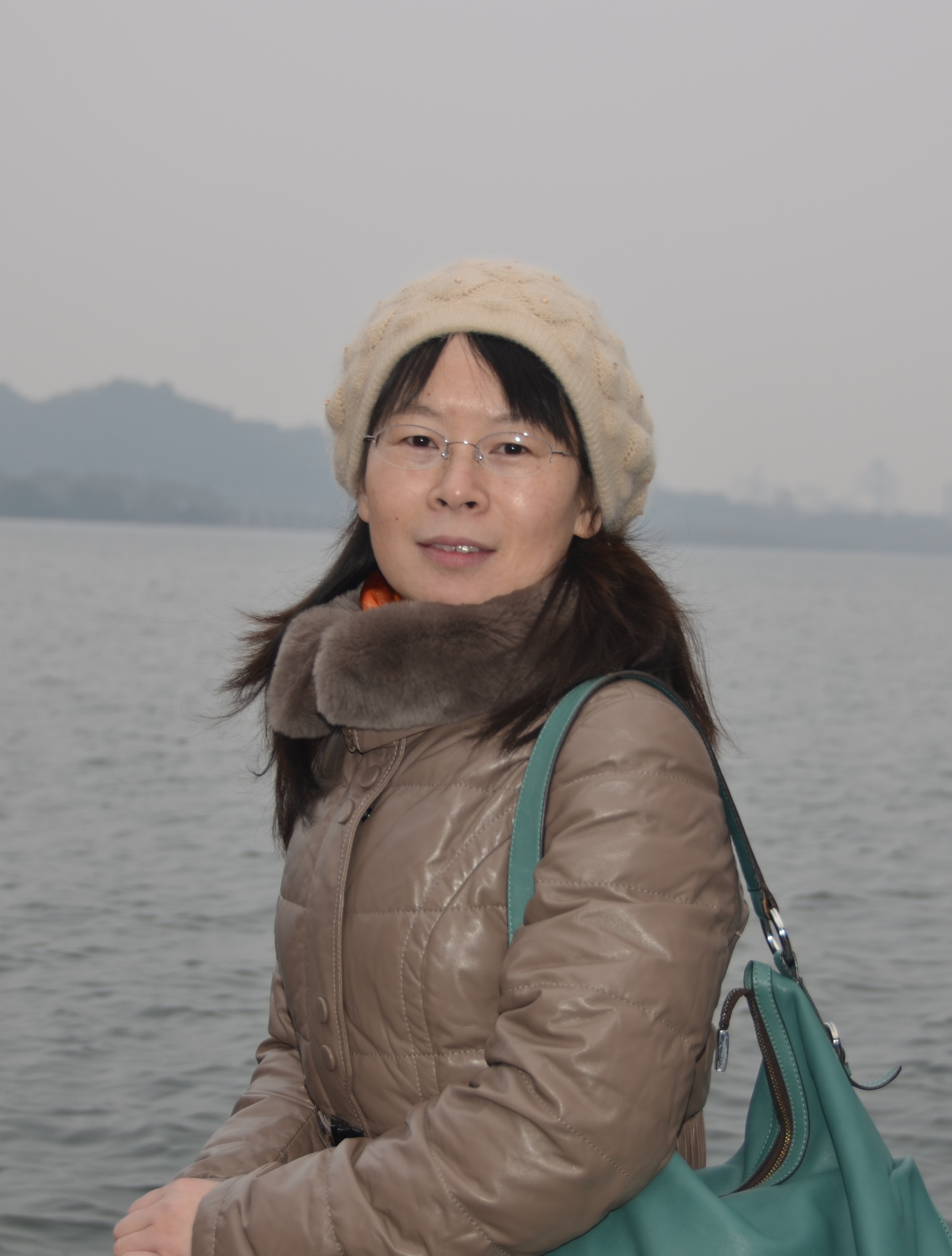
汪 玲
教授,心理学博士,硕士生导师
研究领域为动机、自我调节与创造性。主持国家自然科学基金青年项目、北京市社科基金重点项目、北京市社科基金一般项目等多项课题。在Journal of Vocational Behavior、Educational Psychology、Personality and Individual Differences、心理学报、心理科学等国内外重要学术期刊发表论文50余篇。多次获首都师范大学优秀主讲教师荣誉称号。
首都师范大学心理学院,北京100073。E-mail: wangling_lw@126.com
主要研究成果
Wang, L., Shi, Y., Yang, X., Chen, Y., Chen, Q., Yang, Y., & Luo, Z.* (2025). Achievement goal profiles and anxiety among university students: The indirect roles of emotion regulation strategies. Educational Psychology, 45(5), 641–660.
Yuan, M., Li, Y., Wang, Y.*, Wang, L.*, & Yuan, W. (2025). Perceived distress and life satisfaction among Chinese adolescents: A moderation model of growth mindset. Personality and Individual Differences, 227, 112997.
Luo, Z.*, Yang, Y., Sun, J., Yuan, W., Liu, S., & Wang, L.* (2024). Motivational profiles in mathematics among Chinese secondary school students and their relations with perceived parent/teacher goals and academic achievement. Educational Psychology, 44(4), 395–414.
Wang, L.*, Yang, X., Shi, Y., Wang, Z., Chen, Y., Cui, Y., & Zheng, Y. (2024). Parenting style profiles and adolescents’ creativity: The indirect role of regulatory focus. Current Psychology, 43, 35026–35039.
Wang, L.*, Wang, Z., Shi Y., Yang, X., & Tang, Y. (2024). Parenting behavior profiles and adolescents’ self-handicapping: An analysis from the perspective of self-determination theory. Current Psychology, 43, 29833–29847.
Han, X., Shi, Y., Miao, H., & Wang, L.* (2024). Parenting behaviors and creativity: The roles of autonomous and controlled motivation. Journal of Child and Family Studies, 33(3), 1148–1157.
Wang, Z., Wang, L.*, Miao, H., Yan, R., Shi, Y., Yuan, X., Wang, N., & Wang, F. (2023). Classroom climate and creativity: The indirect effect of autonomous motivation. Journal of Applied Developmental Psychology, 87(101556).
Wang, L.*, Yang, D., Cui Y., Zheng, J., Wang, J., Yang, Y., & Luo, Z.* (2023). Regulatory focus and creativity: Adaptive-innovative cognitive style as a mediator and school climate as a moderator. Psychology in the Schools, 60(4), 1019–1041.
Chen, Y., Luo, S., Wang, L.*, Miao, M., Xi, R., Luo, Z.*, & Wang, Z. (2023). Peer attachment style moderates the effect of mood on creativity. Psychological Reports, 128(3), 1750–1767.
Wang, L.*, Wang, Z., Liu, Q., Li, T., Shi, Y., & Luo, Z.* (2022). Regulatory focus mediates the association between parenting behaviors and creativity among Chinese adolescents. Current Psychology, 42, 30461–30471.
Wang, L.*, Xu, H., Yang, D., Tian, H., Xi, R., Du, K., Shi, B., & Luo, Z.* (2021). Achievement goals and creativity: Self-construal as an antecedent. Journal of Creative Behavior, 55(4), 1047–1058.
Du, K., Wang, Y., Ma, X., Luo, Z., Wang, L.*, & Shi, B.* (2020). Achievement goals and creativity: The mediating role of creative self-efficacy. Educational Psychology, 40(10), 1249–1269.
Shen, Y., Luo, Z.*, Fu, D., Qie, M., & Wang, L. (2020). Parenting Profiles, intolerance of uncertainty, and worry among Chinese primary school children. Journal of Child and Family Studies, 29(8), 2303–2313.
Wang, L.*, & Yan, F. (2018). Emotion regulation strategy mediates the relation between goal orientation and job search behavior among university seniors. Journal of Vocational Behavior, 108, 1–20.
Wang, L.*, Xu, H., Zhang, X., & Fang, P. (2017). The relationship between emotion regulation strategies and job search behavior among fourth-year university students. Journal of Adolescence, 59, 139–147.
Wang, J., Wang, L.*, Liu, R., & Dong, H. (2017). How expected evaluation influences creativity: Regulatory focus as moderator. Motivation and Emotion, 41(2), 147–157.
Liu, H., Wang, L.*, Yao, M., Yang, H., & Wang, D. (2017). Self-other decision-making differences in loss aversion: A regulatory focus perspective. Journal of Applied Social Psychology, 47(2), 90–98.
Liu, L., Wang, L.*, Ren, J., & Liu, C. (2017). Promotion/prevention focus and creative performance: Is it moderated by evaluative stress? Personality and Individual Differences, 105, 185–193.
Wang, Y., & Wang, L.* (2016). Self-construal and creativity: The moderator effect of self-esteem. Personality and Individual Differences, 99, 184–189.
Jin, X., Wang, L.*, & Dong, H. (2016). The relationship between self-construal and creativity — Regulatory focus as moderator. Personality and Individual Differences, 97, 282–288.
Xiao, F., Wang, L.*, Chen, Y., Zheng Z., & Chen, W. (2015). Dispositional and situational autonomy as moderators of mood and creativity. Creativity Research Journal, 27(1), 76–86.
汪玲, 高玉娇, 张晓云. (2017). 情绪创造性的影响因素及其与应对方式的关系. 心理科学, 40(5), 1168–1174.
汪玲, 张敏, 方平*, 李一辰. (2017). 个体及同伴调节聚焦对目标追求的影响. 心理科学, 40(3), 664–669.
杨行, 汪玲*, 刘红瑞, 苏天琦, 宋晓月. (2017). 调节聚焦对期限效果的影响. 心理科学, 40(1), 9–15.
郭小青, 汪玲*. (2016). 大四学生情绪调节策略和调节模式与焦虑的关系. 中国心理卫生杂志, 30(9), 706–711.
汪玲, 马旭然, 鲁晓芳. (2016). 大学生消极情绪修复动机与自尊的关系. 中国心理卫生杂志, 30(6), 476–477.
郑雯, 汪玲*, 方平, 李迪斯. (2015). 如何道歉更有效: 调节聚焦与信息框架的作用. 心理科学, 38(1), 166–171.
逄晓鸣, 汪玲*, 肖凤秋, 齐博. (2012). 反事实思维与后悔的关系: 调节模式的调节作用. 心理科学, 35(5), 1137–1143.
汪玲*, 逄晓鸣, 肖凤秋. (2011). 调节模式理论: 自我调节领域的新进展. 心理科学, 34(3), 703–708.
汪玲*, 林晖芸, 逄晓鸣. (2011). 特质性与情境性调节定向匹配效应的一致性. 心理学报, 43(5), 553–560.
汪玲*, 方平, 鲁蕊. (2010). 目标定向对创造性个性的影响. 心理科学, 33(1), 28–30.
汪玲, 孙晓冬. (2009). 失败恐惧的影响因素及其对学业成绩的影响. 心理学探新, 29(6), 79–82.
王爱娟, 汪玲*. (2009). 目标感染研究述评. 心理科学进展, 17(6), 1257–1263.
孙晓冬, 汪玲*. (2007). 失败恐惧研究述评. 心理科学进展, 15(4), 637–641.
林晖芸, 汪玲*. (2007). 调节性匹配理论述评. 心理科学进展, 15(5), 749–753.